Art-Science Residency
Shifting perspectives through art and neuroscience
Meet Our Counselors
As part of the NeuroNarratives program, we are thrilled to offer dedicated support to all participants through our residency counselors. The counselors are here to provide a supportive space for artists and scientists to talk about their challenges and experiences during the collaborative journey.
More counselors will be announced over time.
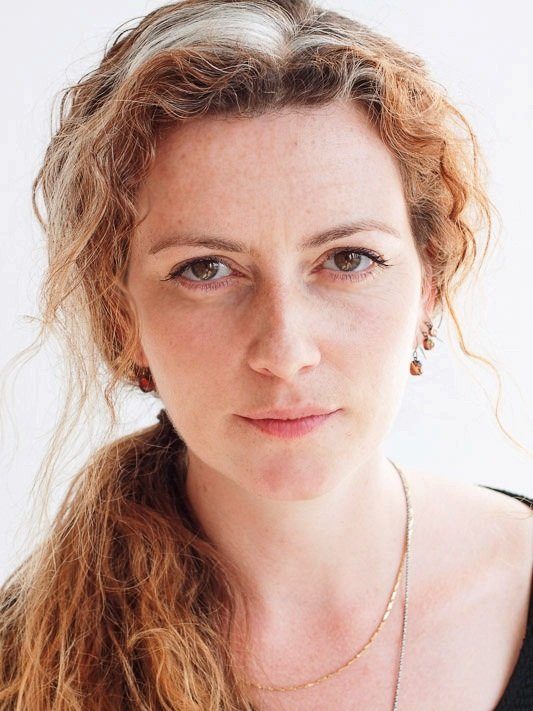
Suzanne Dikker
Finding common ground
Facilitating dialogue between artists and neuroscientists offers a unique opportunity to uncover new modes of inquiry, but it also requires navigating a range of challenges that stem from fundamental differences in language, methodology, and purpose. While science often emphasizes precision, control, and replicability, artistic practice may prioritize ambiguity, and open-ended explorations. These differing frameworks can make initial collaboration difficult, as brainstorming styles, project goals, and even definitions of success may not align.
The goal will be to help residents find common ground and co-develop a working language that supports both rigorous scientific research and art creation.
Bio
Prof. Dr. Suzanne Dikker is a Research Associate Professor of Psychology and Neural Science at NYU, United States, whose work explores how brain and body rhythms shape real-world social interactions. Her research investigates what it means to be “on the same wavelength” with others and how synchrony influences communication, learning, and connection.
At the intersection of neuroscience, art, and education, she co-directs different initiatives such as the MindHive, a civic science platform for co-designed brain research in schools and communities, and the Harmonic Dissonance Collective, which creates participatory installations exploring social dynamics through neurofeedback and performance. Her work includes collaborations with the Marina Abramović Institute, ICK Amsterdam, and artists like Residente and Bad Bunny. Through her work, she not only advances cutting-edge research but also redefines what science communication and public engagement can be.
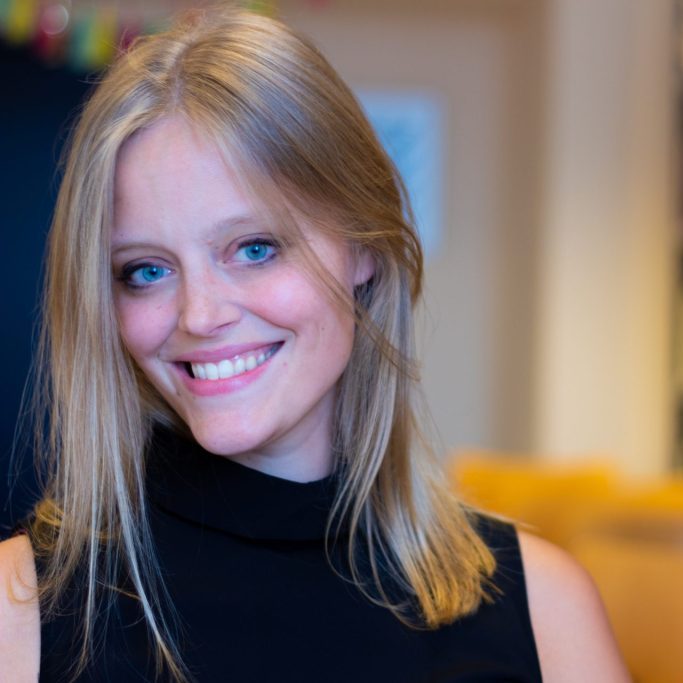
Emilie Caspar
Effective Message Communication
Collaboration between scientists and artists offers a powerful bridge to engage the general public. However, as it brings together people from different backgrounds, it can also raise challenges—particularly in communication. It is crucial that both collaborators can accurately represent each other’s work without overgeneralizing or distorting the facts.
The goal is to offer guidance on how to effectively communicate with a general audience while ensuring that the message respects both the integrity of the scientific content and the artistic practice.
Bio
Prof. Dr. Emilie A. Caspar is an Associate Professor at Ghent University, Belgium, and an internationally recognized expert in the neuroscience of morality and obedience to authority. Prof. Caspar has developed a unique expertise in conducting field research with underrepresented and often inaccessible populations such as military personnel, radicalized individuals, inmates, and both survivors and former perpetrators of genocide in Rwanda and Cambodia.
Her commitment to societal impact also extends beyond academia.
She serves as a scientific consultant for humanitarian NGOs and has popularized science on multiple occasions, such as at the Nobel Prize Outreach and the ERC “Fact & Fiction: The Future of Democracy” event or the “Falling Walls 2024 – Breakthrough” event. Her general public book “Just Following Orders: Atrocities and the Brain Sciences of Obedience” was named among the Best Books of the Year by Cambridge University Press, among the five of the best science picks by Nature and was featured in The New Statesman’s Best of Academic Autumn Press.

Mauricio van der Maesen de Sombreff
Technical advisor
Effective technical advising ensures that artistic vision and technological possibilities remain aligned from the earliest stages of a project.
The goal is to support collaborators in exploring the technologies relevant to their work and to offer guidance throughout the process, ensuring that the final result stays coherent and feasible without limiting either artistic or scientific intentions.
Bio
Mauricio van der Maesen de Sombreff is a visual artist, engineer, and technical advisor based in Amsterdam. As part of the advisory team at the Rijksakademie MediaLab, he specializes in electronics and physical computing, supporting artists in aligning technological possibilities with their creative intentions. For the past five years, he has also assisted LIMA with the preservation of digital art.
After completing a degree in Electrical Engineering, he pursued further studies in Computer Science with a specialization in signal processing. His dynamic career spans telecommunications, microelectronics, industrial automation, sound engineering, and software development, fields connected by his fascination with technology and its creative potential. In addition to his technical background, Mauricio studied Fine Arts and Design at the Gerrit Rietveld Academy. His art practice explores how people connect with and interact with their surroundings through the production and use of technology. Rooted in his engineering expertise, his work often applies scientific and algorithmic methods to create digital interpretations of reality.
More Counselors to Be Announced

Got questions? Contact us.
neuronarrativesinfo@gmail.com
© NeuroNarratives 2025. All rights reserved.
 NeuroNarratives